


THE WEEK ON WALL STREET
Stocks were mixed last week as investors navigated Q4 corporate results, a widely expected Fed decision, and a handful of economic reports. The S&P 500 Index rose 0.34 percent, while the Nasdaq Composite Index edged down 0.17 percent. The Dow Jones Industrial Average declined 0.42 percent. By contrast, the MSCI EAFE Index, which tracks developed overseas stock markets, rose 1.22 percent.
FACT OF THE WEEK
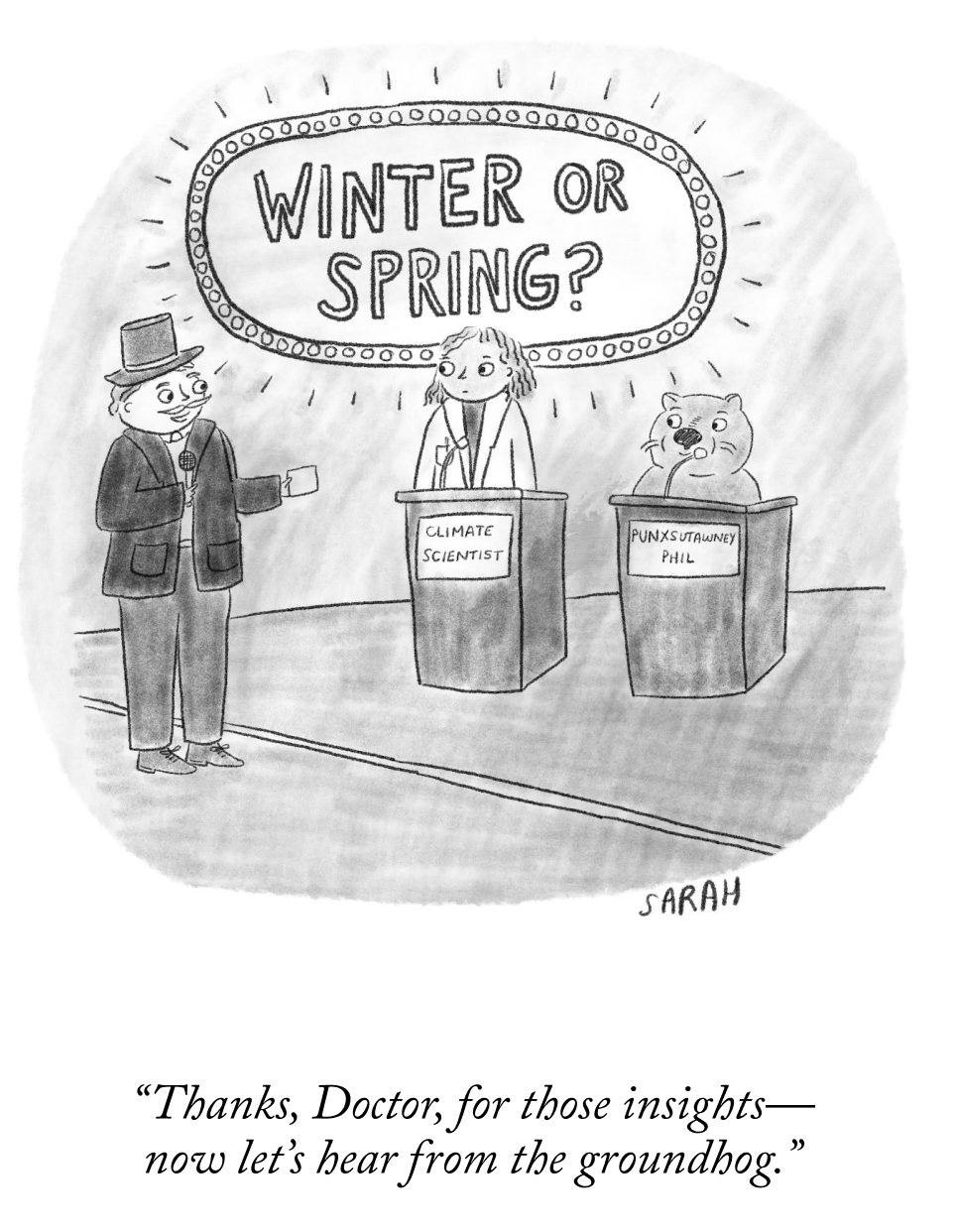
Groundhog Day 2026 falls on a Monday, February 2, 2026 (always occurs on February 2). On this day, townsfolk in Punxsutawney, Pennsylvania, gather in Gobbler’s Knob to watch as an unsuspecting furry marmot is plucked from his burrow to predict the weather for the rest of the winter. But anyone who bought a copy of the Farmers’ Almanac has known what’s in store for the rest of the winter since August!
First, What Does The Farmers’ Almanac Say?
Whether or not you follow the groundhog, or simply enjoy the folklore (don’t worry, we don’t mind), we’re here to tell you: winter isn’t going anywhere any time soon. Generally speaking, our long-range predictions say this wet winter whirlwind will take a moment to unwind. No matter what the weather, spring will officially arrive with the Vernal Equinox on March 20, 2026, at 10:46 a.m. However, the warmer, spring-like weather may not come until a little later.
How Does The Almanac Do it?
The Farmers’ Almanac uses a mathematical and astronomical formula to make our long-range weather predictions, not folklore. We look at sunspot activity, tidal action of the Moon, positions of the planets, and many other factors to carefully craft a year’s worth of weather forecasts. Fans of the Almanac say our weather forecasts are accurate 80-85% of the time.
Even though Phil is wrong on occasion, we still respect the groundhog and a “holiday” that’s stuck around for more than a century, and one in which we are reminded to put down our high-tech gadgets and consult with nature.
Shadow vs. No Shadow Folklore
People often get confused about what it means if the groundhog sees his shadow or not. Let’s clear it up. According to folklore:
- If Phil does see his shadow (meaning the Sun is shining) on Groundhog Day, winter will not end early, and we’ll have another 6 weeks of it.
- If Phil doesn’t see his shadow (cloudy) we’ll have an early spring.
What Did Punxsutawney Phil Predict for 2025? Phil predicted six more weeks of winter in 2025. Since Punxsutawney Phil first began prognosticating the weather back in 1887, he has predicted an early end to winter 21 times. Previous years with early spring predictions include 2024, 2020, 2019, and 2016.
MARKET MINUTE
S&P 500 Touches 7,000
The S&P 500 and Nasdaq advanced early in the week as investors looked ahead to the Fed meeting and corporate results from several large companies.
On Wednesday, the Federal Reserve decided to keep interest rates steady, as widely expected. Market reaction was muted, with all three major averages little changed by the close. Disappointing earnings results from one megacap tech firm, announced after the market closed on Wednesday, unsettled investors and dragged the Nasdaq down on Thursday.
Stocks opened lower Friday, after the White House nominated Fed veteran Kevin Warsh as the next Fed chair. A warmer-than-expected December wholesale inflation report and concerns about a government shutdown added to bearish investor sentiment as the week wrapped up.
The Fed Holds Steady
The Fed funds rate was held at its current 3.5 percent to 3.75 percent target range at its January meeting. The decision followed three consecutive meetings at which the Fed cut rates; it marked the first time the Fed held rates steady since July. The next Fed meeting is in mid-March.
At the post-meeting press conference, Fed Chair Powell did not answer any questions regarding the Justice Department’s investigation. The January 19, 2026, issue of Weekly Market Insights misstated the status of the investigation concerning the Fed Chair by referring to it as an indictment. We regret any confusion.
FINANCIAL STRATEGY OF THE WEEK
Navigating Retirement Pitfalls
Much is written about the classic financial mistakes that plague start-ups, family businesses, corporations, and charities. Some classic financial missteps have been known to plague retirees, too.
Calling them "missteps" may be a bit harsh, as not all of them represent errors in judgment. Either way, becoming aware of these potential pitfalls may help you to avoid falling into them in the future.
Managing Social Security. Social Security benefits are structured to rise about 8% for every year you delay receiving them after your full retirement age. Is waiting a few years to apply for benefits an idea you might consider? Filing for your monthly benefits before you reach your full retirement age can mean comparatively smaller monthly payments.
Managing medical costs. One report estimates that the average couple retiring at age 65 can expect to need over $300,000 to cover health care expenses during the course of their retirement, even with additional coverage such as Medicare Part D, Medigap, and dental insurance. Having a strategy can help you be better prepared for medical costs.
Understanding longevity. Actuaries at the Social Security Administration project that a 65-year-old man has a 33% chance and a 65-year-old woman has a 45% chance of living to age 90. The prospect of a 20- or 30-year retirement is not only reasonable, but it should be expected.
Managing withdrawals. You may have heard of the "4% rule," a guideline stating that you should take out only about 4% of your retirement savings annually. Each person's situation is unique, but having some guidelines can help you prepare.
Managing taxes. Some people enter retirement with investments in both taxable and tax-advantaged accounts. Which accounts should you draw money from first? To answer the question, a qualified financial professional would need to review your financial situation so they can better understand your goals and risk tolerance.
Managing other costs, like college. There is no "financial aid" program for retirement. There are no "retirement loans." A financial professional can help you review your anticipated income and costs before you commit to a long-term strategy, and help you make a balanced decision between retirement and helping with the cost of college for your children or grandchildren.